
At Shambala, we’re committed to creating a festival where everyone feels welcome, respected and able to fully take part. We know that building a truly inclusive community is ongoing work. It requires listening, learning, accountability and a willingness to keep improving.
Our Diversity, Equity and Inclusion (DEI) work is woven throughout the festival—from creating safer spaces and strengthening accessibility, to improving representation across our artists, crew, volunteers and audience, supporting fair reporting processes and reducing financial barriers to attendance.
We all play a part in creating the culture of Shambala. The sections below explain what we’re asking of our community, the support available if something goes wrong, and the work we’re doing behind the scenes to make the festival more inclusive every year.
![Luis Kramer_Shambala Festival_2025-621 [Web]](https://www.shambalafestival.org/wp-content/uploads/Luis-Kramer_Shambala-Festival_2025-621-Web-480x320.jpeg)
Respect, Education and Safer Spaces
We believe everyone has a role to play in creating an inclusive festival culture.
We ask all Shambalans to treat one another with kindness, respect and curiosity, to be open to learning, and to consider the impact their words and actions may have on others.
Throughout the festival we share guidance around:
- Microaggressions and their impact
- Cultural appropriation
- Inclusive language
- Being an active bystander and advocate
- Respectful ways to challenge harmful behaviour
You’ll find this guidance in our printed programme, Essential Information Guide, festival app and festival communications to help build a safer, more welcoming environment for everyone.
![_Leora Bermeister_Shambala Festival_2025_-0751 [Web]](https://www.shambalafestival.org/wp-content/uploads/Leora-Bermeister_Shambala-Festival_2025_-0751-Web-1-480x320.jpeg)
Being an Active Advocate
Creating an inclusive festival isn’t solely the responsibility of our staff—it’s something we all contribute to.
If you see someone who appears uncomfortable, excluded or in need of support, we encourage you to check in if it’s safe to do so, help them access support services, or alert a member of the festival team.
Small acts of kindness, solidarity and respectful intervention can make a significant difference to someone’s experience.
Inclusive Language
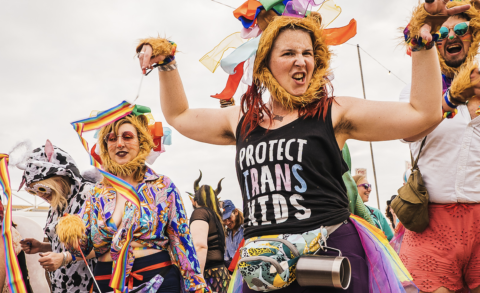
Words matter. We encourage everyone at Shambala to use language that is respectful, welcoming and inclusive, while avoiding assumptions about someone’s identity, background or lived experience.
We continue to share guidance around pronouns, gender-inclusive language and respectful communication across our festival materials.
![Luis Kramer_Shambala Festival_2025-111 [Web]](https://www.shambalafestival.org/wp-content/uploads/Luis-Kramer_Shambala-Festival_2025-111-Web-480x320.jpeg)
Cultural Appropriation
Shambala celebrates creativity and self-expression, while recognising that some clothing, hairstyles, symbols and traditions have deep cultural, religious or ceremonial significance.
We encourage everyone to celebrate creatively without using cultures, identities or sacred traditions as costumes, and to remain open to learning if someone explains why something may be harmful.
![Luis Kramer_Shambala Festival_2025-290 [Web] (1)](https://www.shambalafestival.org/wp-content/uploads/Luis-Kramer_Shambala-Festival_2025-290-Web-1-480x320.jpeg)
Support & Reporting
We know that isolated incidents can have a significant impact on someone’s experience, and that managing the outcomes in a supportive way can strongly influence how a person recovers from the experience. Therefore, we encourage anyone who experiences or witnesses discrimination, harassment, bullying, exclusion or other harmful behaviour to seek support or report their concerns. No concern is considered too small.
We take a trauma-informed, person-led approach, meaning we prioritise listening, safety and the wishes of the person affected wherever possible.
Dedicated DEI support is available throughout the festival alongside our Welfare, Accessibility, Safeguarding, Medical, Security and Event Management teams to help people access the support they need.
![LindsayMelbourne_Shambala_Festival_2025-40 [Web]](https://www.shambalafestival.org/wp-content/uploads/LindsayMelbourne_Shambala_Festival_2025-40-Web-480x320.jpeg)
Reporting Routes
Concerns can be raised through:
* Any steward, security team member or member of staff
* Campsite Hubs
* The Public Information Point
* The Welfare or Medical teams
All reports are treated respectfully and confidentially wherever possible.
Accessibility
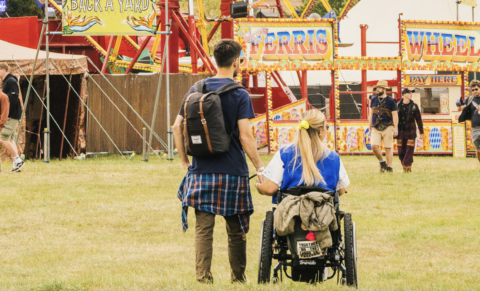
Accessibility is central to how we design and deliver the festival. Our experienced, disabled-led Accessibility Team works throughout the year to improve access and provide support for disabled audience members, artists, crew and volunteers.
Find out more on our Accessibility pages
![_Leora Bermeister_Shambala Festival_2025_-5153 [Web]](https://www.shambalafestival.org/wp-content/uploads/Leora-Bermeister_Shambala-Festival_2025_-5153-Web-480x320.jpeg)
Pay it Forwards: Share The Love
Our Pay It Forward: Share the Love initiative helps remove financial barriers to attending Shambala.
Through donations from our audience, artists and crew, we’re able to provide fully supported festival experiences for people who otherwise wouldn’t be able to attend, working with trusted community organisations and partner charities to reach those who would benefit most.
![Luis Kramer_Shambala Festival_2025-387 [Web]](https://www.shambalafestival.org/wp-content/uploads/Luis-Kramer_Shambala-Festival_2025-387-Web-480x320.jpeg)
Climate Justice
At Shambala, we believe that caring for people and caring for the planet go hand in hand. As our understanding of sustainability has evolved, so too has our commitment to climate justice—recognising that the climate crisis is not only an environmental issue, but also a social one.
Climate change disproportionately affects communities who have contributed least to it, particularly those already experiencing inequality and marginalisation. That’s why we’re working to embed climate justice into the way we produce the festival, develop our programming and collaborate with partners, while continuing to reduce our environmental impact and champion positive change across the events industry.
![Luis Kramer_Shambala Festival_2025-203 [Web]](https://www.shambalafestival.org/wp-content/uploads/Luis-Kramer_Shambala-Festival_2025-203-Web-480x320.jpeg)
Listening & Learning
In 2021, we carried out research with people from communities that have historically experienced exclusion or marginalisation to better understand their experiences of Shambala. Their feedback helped shape our ongoing Diversity, Equity and Inclusion Action Plan.
Since then, we’ve continued gathering feedback from our audience, artists, crew and volunteers to help us identify barriers, improve representation and make meaningful changes across the festival.
We also invest in learning and development across the organisation. Our core team has taken part in allyship training, and we regularly deliver Diversity, Equity and Inclusion training and guidance for managers to help build inclusive leadership, foster respectful team cultures and ensure everyone working at Shambala understands their role in creating a safe and welcoming environment.
![Luis Kramer_Shambala Festival_2025-256 [Web]](https://www.shambalafestival.org/wp-content/uploads/Luis-Kramer_Shambala-Festival_2025-256-Web-480x320.jpeg)
Representation & Data
We collect anonymous demographic data across our audience, artists, crew and volunteers to help us understand who Shambala is reaching and where we need to improve. This data allows us to benchmark our progress and informs recruitment, programming and organisational decision-making as we work towards a festival that better reflects the diversity of our wider communities.
Alongside this, we’re working to improve diversity across our workforce through more focused and inclusive recruitment practices, particularly across our crew and operational teams. We know that building a more representative festival requires removing barriers to participation and actively widening access to opportunities.
![Ania Shrimpton_Shambala Festival 2019__DSC9192 [Web] (2)](https://www.shambalafestival.org/wp-content/uploads/Ania-Shrimpton_Shambala-Festival-2019__DSC9192-Web-2-300x300.webp)